We remain fully operational. Our teams are working around the clock to ensure your deliveries continue safely.

DOWNLOAD THE APP


Copyright © 2025 Desertcart Holdings Limited
DOWNLOAD THE APP
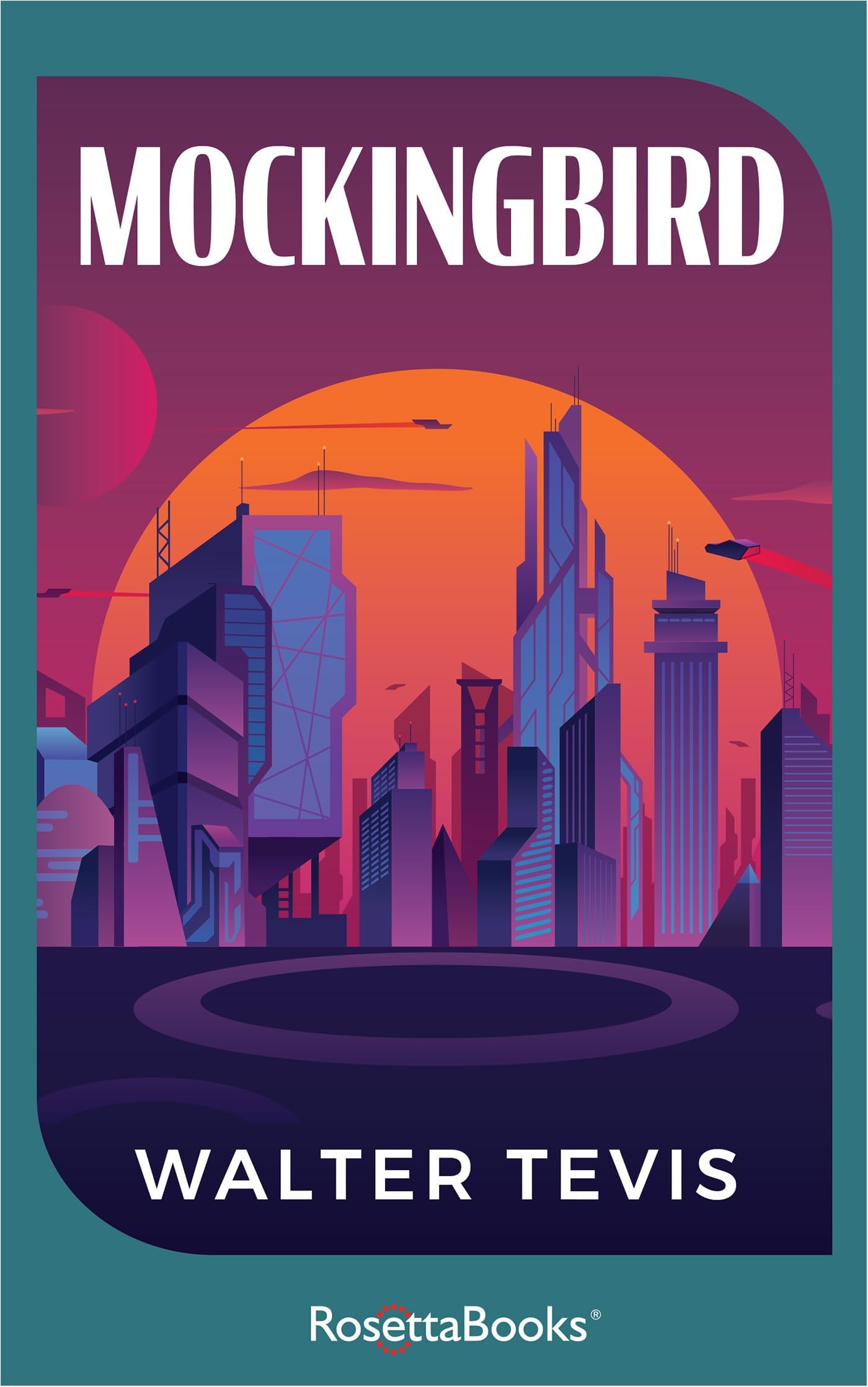
Mockingbird - Kindle edition by Tevis, Walter. Download it once and read it on your Kindle device, PC, phones or tablets. Use features like bookmarks, note taking and highlighting while reading Mockingbird. Review: Destined to be a classic - I read science fiction only very occasionally. Usually, I can enjoy the ideas it provokes, but don’t think much of it as literature. This book is by Walter Tevis, who also wrote THE HUSTLER, THE COLOR OF MONEY, THE MAN WHO FELL TO EARTH, and THE QUEEN’S GAMBIT. Tevis was a brilliant author and wrote this story of a dystopian future that goes beyond the sci-fi genre. I’d classify it as a work of literature right up there with 1984 and BRAVE NEW WORLD. However, there is a big difference between Tevis and his predecessors: whereas the Orwell and Huxley books have quite grim endings, this one is not a total downer. Orwell and Huxley were giving warnings; Tevis was writing about the will to be human. Set in an earthly future a few hundred years from now, humans have been deemed obsolete. Robots are now in control and the robots’ AI has convinced them that humans need to die out. As a result, there are very few humans left who are capable of reproducing. But those capable few are not really very interested, thanks to drugs and brainwashing. At first glance this future society seems normal—there are children playing in the park and enjoying watching the animals at the zoo. But it turns out that the children and the animals are all robots and androids. The androids have pleasant personalities and a kind of intellect. They can learn. They have some feelings, but they cannot fall in love and they wish they could. They have no reproductive organs, either internal or external. The really smart ones wish they could just kill themselves like so many of the last humans are doing, but they cannot go against their programming and end up living unhappily for centuries. Enter a rebellious young human woman who secretly won’t take the drugs and wants to have a child, although she has no idea of how to do it. There are lots of parallels between this young woman and the Biblical Eve. This is not genre fiction; it’s a work of art. Fast-moving and full of provocative questions, I found it very compelling reading! I read it in 4 days. I haven’t read a novel so quickly in decades. Recommended! Review: Dated, solid, a little problematic, but a good read. - This is a solid classic of SF -- it has that dated feel that one gets today from something written in the 60s -- which makes me wonder why I never heard mention of it before. When I started the book I knew it was written a while ago, but I didn't check the publication date before I began reading, then I had fun figuring out when it written based on the story. Very few computers, no internet, so pre-1990. Turns out it was 1980. I must admit that I found the black male robot with no genitals to be somewhat disturbing. What was the author saying by making him black? It was definitely pointed that he was black, but a castrated black man? A statement about black men in America? A disturbing statement. That's one reason I'm giving it only 4 stars. I wondered if the author were black, but he's white. Turns out he wrote the books that the movies "The Hustler" and "The Man Who Fell to Earth" were made from. Interestingly I happened on Mockingbird because I found a reviewer whose reviews I liked a lot, and she loved a book called Mockingbird, but I'd forgotten the details when I moved from being interested in books she liked to actually buying one of them. So I bought the wrong Mockingbird! I had a good read anyway, and now I have an excellent YA novel (the Kathryn Erskine Mockingbird) to look forward to.
| ASIN | B07H166YQ3 |
| Accessibility | Learn more |
| Best Sellers Rank | #604,481 in Kindle Store ( See Top 100 in Kindle Store ) #2,635 in Romance Literary Fiction #4,804 in Dystopian Science Fiction (Kindle Store) #5,677 in Post-Apocalyptic Science Fiction (Kindle Store) |
| Customer Reviews | 4.5 4.5 out of 5 stars (2,545) |
| Enhanced typesetting | Enabled |
| File size | 2.6 MB |
| ISBN-13 | 978-0795342905 |
| Language | English |
| Page Flip | Enabled |
| Print length | 292 pages |
| Publication date | September 29, 2014 |
| Publisher | RosettaBooks |
| Screen Reader | Supported |
| Word Wise | Enabled |
| X-Ray | Not Enabled |
K**N
Destined to be a classic
I read science fiction only very occasionally. Usually, I can enjoy the ideas it provokes, but don’t think much of it as literature. This book is by Walter Tevis, who also wrote THE HUSTLER, THE COLOR OF MONEY, THE MAN WHO FELL TO EARTH, and THE QUEEN’S GAMBIT. Tevis was a brilliant author and wrote this story of a dystopian future that goes beyond the sci-fi genre. I’d classify it as a work of literature right up there with 1984 and BRAVE NEW WORLD. However, there is a big difference between Tevis and his predecessors: whereas the Orwell and Huxley books have quite grim endings, this one is not a total downer. Orwell and Huxley were giving warnings; Tevis was writing about the will to be human. Set in an earthly future a few hundred years from now, humans have been deemed obsolete. Robots are now in control and the robots’ AI has convinced them that humans need to die out. As a result, there are very few humans left who are capable of reproducing. But those capable few are not really very interested, thanks to drugs and brainwashing. At first glance this future society seems normal—there are children playing in the park and enjoying watching the animals at the zoo. But it turns out that the children and the animals are all robots and androids. The androids have pleasant personalities and a kind of intellect. They can learn. They have some feelings, but they cannot fall in love and they wish they could. They have no reproductive organs, either internal or external. The really smart ones wish they could just kill themselves like so many of the last humans are doing, but they cannot go against their programming and end up living unhappily for centuries. Enter a rebellious young human woman who secretly won’t take the drugs and wants to have a child, although she has no idea of how to do it. There are lots of parallels between this young woman and the Biblical Eve. This is not genre fiction; it’s a work of art. Fast-moving and full of provocative questions, I found it very compelling reading! I read it in 4 days. I haven’t read a novel so quickly in decades. Recommended!
P**U
Dated, solid, a little problematic, but a good read.
This is a solid classic of SF -- it has that dated feel that one gets today from something written in the 60s -- which makes me wonder why I never heard mention of it before. When I started the book I knew it was written a while ago, but I didn't check the publication date before I began reading, then I had fun figuring out when it written based on the story. Very few computers, no internet, so pre-1990. Turns out it was 1980. I must admit that I found the black male robot with no genitals to be somewhat disturbing. What was the author saying by making him black? It was definitely pointed that he was black, but a castrated black man? A statement about black men in America? A disturbing statement. That's one reason I'm giving it only 4 stars. I wondered if the author were black, but he's white. Turns out he wrote the books that the movies "The Hustler" and "The Man Who Fell to Earth" were made from. Interestingly I happened on Mockingbird because I found a reviewer whose reviews I liked a lot, and she loved a book called Mockingbird, but I'd forgotten the details when I moved from being interested in books she liked to actually buying one of them. So I bought the wrong Mockingbird! I had a good read anyway, and now I have an excellent YA novel (the Kathryn Erskine Mockingbird) to look forward to.
F**R
Prescient
You will hear echoes of all the dystopian classics — Brave New World, Fahrenheit 451, 1984, etc. — but with an important twist. This is the story of a drug addled humanity, brainwashed to believe that meaningful human relationships are an invasion of privacy and a violation of individuality. And who is doing the brainwashing? A mostly dilapidated collection of robots that don’t function very well anymore. It’s a brilliant anticipation of an AI controlled world where nothing really works and humans have lost the capacity to care. Sound familiar? This is another masterpiece from the incredible mind of Walter Tevis, who not only possessed a fabulous imagination but also wrote like a dream.
R**Y
Wonderful!
Amazingly good story with beautiful use of language, published in 1980 and almost every word rings true today. When I read, I fold the corner of the page over when there is a line or scene I especially like. I have a lot of folded over pages on this one. A few examples (no plot spoilers): "You know what work is these days. They have to deactivate robots to find things to pay us for doing."; "'Is there a date now? Does this year have a number?' He looked at me coldly. 'No, there is no date.' I would like to know the date. I would like for my child to have a birth date.'"; "Nothing in my education - my stupid, life-hating education - had prepared me for what I was about to do"; "Since no one had devised a way of making cars safe in the hands of a human driver, it was decided to discontinue them." It's a very moving story that transcends the SF genre and is refreshingly free of political correctness. Really super stuff. BTW, after reading this, I turned to two other books by Tevis, The Man Who Fell To Earth and Queen's Gambit. I enjoyed the latter books, but I think Mockingbird has more good lines and a better set of themes. Mockingbird is a story that makes you appreciate daily life all the more when you put it down.
D**E
First Tevis book I have read, but it won't be the last. Brilliant writing and an enthralling story, with plenty to think about. Highly recommended.
D**4
With its eyecatching cover illustration, Mockingbird is one of the most engaging and thought-provoking dystopian books I have read to date. The quirky blurb on the back cover doesn't properly prepare you for the story you're about to follow. Mockingbird falls somewhere in between Farenheit 451, Brave New World and Tevis' own The Man Who Fell to Earth. Written in 1980, Mockingbird tells the classic tale of how man created robots to help then, ultimately becoming reliant on the robots and technology, resulting in the downfall of society - and it's some time after this that the book begins. The story is set in New York, in an initially undetermined future, where humanoid robots make up a large part of society and the government. Buildings lie abandoned and overgrown, and the population is sterile. People cannot read and what remains of the human race spend their days doped up and high, dependent on freely-dispensed Sopor pills. Mockingbird brings together a trio of protagonists, starting with Robert Spofforth, a Black, towering youthful Make Nine robot. The last Make Nine ever made, with a brain fuelled by real human memories from a long-dead creator. Spofforth is troubled by his fragmented dreams and memories and has only one thing on his mind - his own death. However one day Spofforth meets Bentley - a man who can read. The chapters which follow cleverly alternate between Spofforth and Bentley, and follow Bentley's discovery of reading, writing journal entries and watching archive films. Bentley feels that something isn't right. Something under the surface; something about his upbringing and conditioning. He starts to question things. Why are the children in the streets robots? Why are there no young people? Why can't people read? Why do people immolate themselves in public? Why are the animals in the Zoo robots? And it was whilst at the Zoo that he meets Mary Lou - a woman who somehow escaped the conditioning in her youth. Mockingbird is a cinematic read. It depicts a troubled society in a near future, in a very assertable way. It is sad, haunting, unsettling and exciting. The storytelling perhaps follows a more commonplace style from the midpoint of the book, but never drifts too far away from the main story to become tiresome. Tevis' characters are solidly developed and believable. I found myself feeling for them - even Spofforth - and desperate to read on at the end of every chapter. The themes may not be anything radical or revolutionary; we've seen and read it all before in various forms, but they're done so well in Mockingbird. I don't doubt that a well-read copy of this book sits on many a film director's bookshelf, and deservedly so. Yet Mockingbird feels undervalued and seldom mentioned, which is a great shame.
D**F
I read in one review: This is, were SF meets literatur. I totally agree. One of the best books I read since long ago.
桜**上
これは1980年発表の作品だが、今の時代にこそ現実味と共感を持って読まれる物語ではないかと思う。 ※※※ 舞台は「未来のいつか」(正確な年代は最終章まで分からない) 人類は「過去のいつか」に技術の粋を尽くして、理想的な世界を管理するべきAIシステムを構築した。 平和で幸せに暮らせる世界…それは誰もが望む未来像だが、そこに至る自身の努力を放棄しシステムに依存するあまり、文明も文化も、感情さえも失ってしまっている。 ことに、この世代には子供が生まれず、人類は絶滅の危機に瀕しているが、もはやそれを憂える知性を持つ者もいない… ※※※ この終焉の未来で「何かが違う」と感じ始めた男女が出逢い、自分の生き方を求めて苦闘する。 そして三人目の主人公は、システムの頂点に立つ最上位のAIロボット…過去から長い年月、世界の「劣化」を見続けながらも、プログラムに従って管理を続けてきた。しかし、彼は人間の脳をコピーして造られた頭脳を持ち、その際に消え残った「人間性」の断片に混乱し苦悩し、常に果たせない自死願望を抱いている。 (彼の「消去出来ない人間性」による世界の不具合は、衝撃的で重大ではあるが、彼だけを責める気にはなれない…) ※※※ この三人の辿り着いた結末は、果して未来への希望なのか唯の儚い夢なのか… ※※※ 昨今の科学技術の発達、殊にAIの発達("進歩"とはあえて言わない)は驚くほど急速だ。そして、専門家はともかく、一般人の認識はその速度に追い付けているとは思えない。AIをどう扱えばよいのか、何ができて何ができないのか…それらを理解する前にAIが生活に浸透し、人々が意識せず生活のあり方を変えてゆく過程を、今、私たちは実際に目にしているのではないか…という不安を、この物語は残してゆく。 しかし、荒廃した世界になお人間性と愛の芽生えを見せてくれる優しさと温かさ、叙情的な雰囲気はたいへん魅力的だった。 ※※※ 最後に…物語を読んで泣いたのは久しぶりです… ※※※ ( かつて早川書房から出ていた和訳が現在絶版ですが、今こそ再版してほしいものです。) (後に追加) ☆ 一度読み終えてからずっと、気になっていたことがあり…ふと気がつきました。 【これは未来の物語ではなく、過去の物語でもあるかもしれない】 と。 ☆ Bentleyと、動物園で彼に木の実を手渡すMary Lou、この二人は、アダムとイヴを思わせます。 そして裁判所で下級のロボットの足を直してやるSpoffotheはイエスを… エンパイアステートビルの屋上から、両手を広げて落ちてゆく彼の最期の姿は十字架のイエスと重なります ☆ …そして、Spofforthがリセットした世界を舞台に、ここを始まりとして、人類はまた長い苦難の歴史を歩んで行くのではないかと… ☆ 何が本当に幸せなのかわからない、しかし探し続ける… それが過去であっても未来であっても、人間というものなのかもしれません
D**I
Why this book is not as famous as Do Androids Dream Of Electric Sheep or 2001: A Space Odyssey, I do not know. It has so much to say about humanity, society, the power of literature (and literacy) and the dumbing-down of our educational systems...it's said quite often these days, flippantly, that "Common sense isn't too common anymore"; this book is a tour of a world where that statement has been taken to its (il)logical conclusion.
Trustpilot
1 month ago
3 days ago