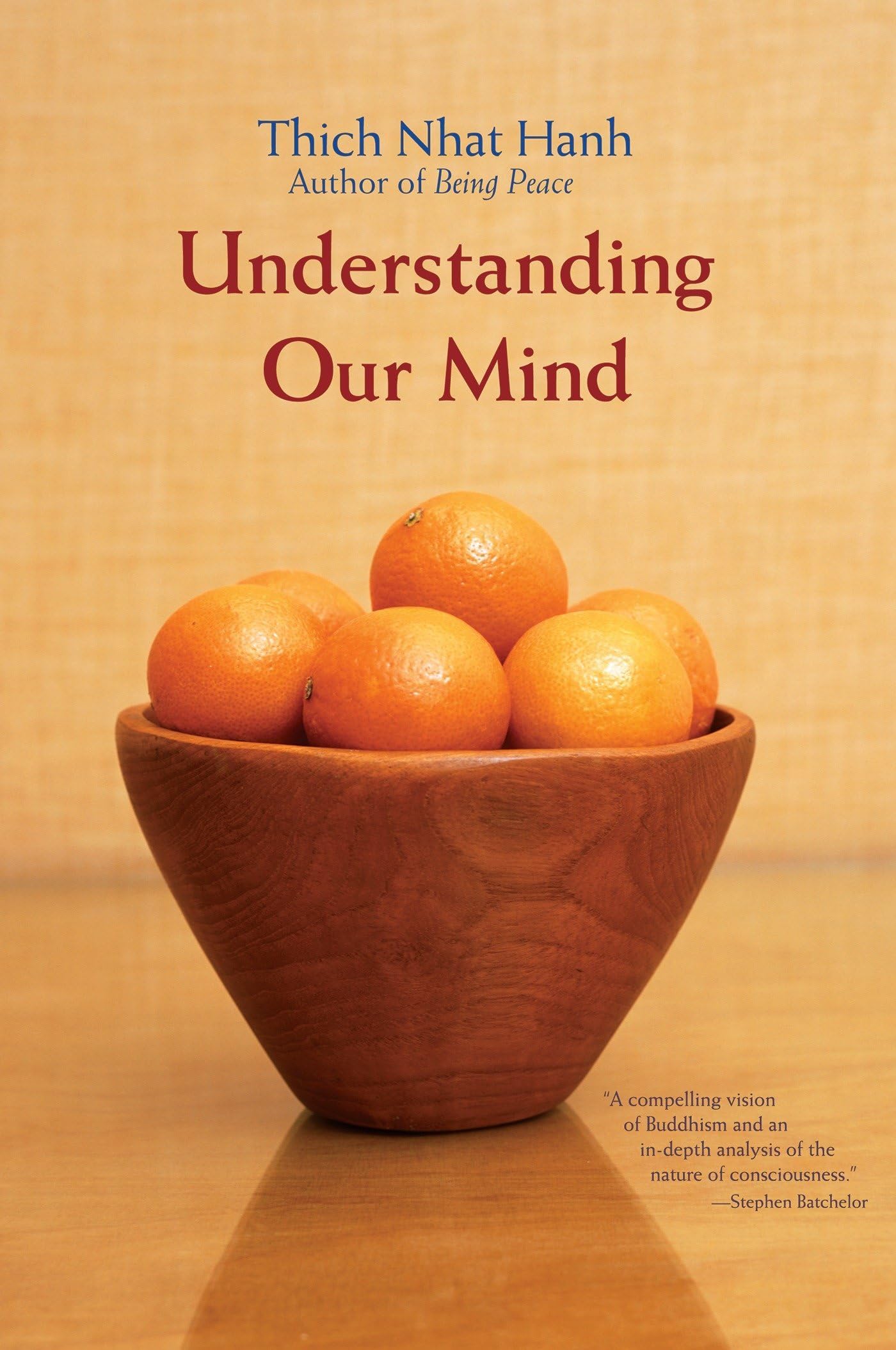
Understanding Our Mind: 50 Verses on Buddhist Psychology
Product ID: 8876016
Desertcart purchases this item on your behalf and handles shipping, customs, and support to Cayman Islands.
Thich Nhat Hanh pulls from 50 classic Buddhist verses to present the basic teachings of Buddhist applied psychology, exploring the true nature of our feelings and perceptions. Based on the 50 verses on the nature of consciousness taken from the great 5th-century Buddhist master Vasubandhu and the teachings of the Avatamsaka Sutra, Thich Nhat Hanh focuses on the direct experience of recognizing, embracing, and looking deeply into the nature of our feelings and perceptions. Presenting the basic teachings of Buddhist applied psychology, Understanding Our Mind shows us how our mind is like a field, where every kind of seed is planted—seeds of suffering, anger, happiness, and peace. The quality of our life depends on the quality of the seeds in our mind. If we know how to water seeds of joy and transform seeds of suffering, then understanding, love, and compassion will flower. Vietnamese Zen Master Thuong Chieu said, “When we understand how our mind works, the practice becomes easy.”
| Dimensions | 5.98 x 0.71 x 9.02 inches |
| Edition | Revised ed. |
| Isbn 10 | 1888375302 |
| Isbn 13 | 978-1888375305 |
| Item Weight | 10.8 ounces |
| Language | English |
| Print Length | 256 pages |
| Publication Date | February 9, 2002 |
| Publisher | Parallax Press |
User
Potentially Life-Changing
While I agree with the other reviewers that the subject matter of this book is complex, my experience has been that upon completion, all the pieces fall into place with incredible grace. In a nutshell, we need to practice nourishing the seeds (content) of our consciousness--and unconsciousness--with mindfulness. Mindfullness is the sunshine that nourishes 'wholesome' seeds and enables the transformation of 'unwholesome' seeds, such as anger, envy and desire into peace, love and compassion. What then is mindfulness? Mindfulness is a continuous practice that includes meditation and an effort to live healthily and happily in the present moment, as opposed to regretfully in the past or fearfully in the non-existent future. Suffering occurs because our mind distorts our perceptions and we mistake perception for reality, arriving at erroneous conclusions about the people, places and events that surround us. Once we realize this and begin to achieve greater levels of mindfulness through practice and meditation, we can begin to transform suffering into joy. So, yes, while some of the ideas in this book are complex (such as the concept of interbeing) its essences is elegant in its simplicity.Incidentally, my father was a Freudian Psychoanalyst and over the course of my life (45) I have spent many hours with him discussing the role of the unconscious in relation to our everyday impulses and actions. I also went through 5 years of intensive psychoanalysis as a young adult. The conceptual base presented in Understanding Our Mind is not altogether different from Freud's treatment of the unconscious. As the author himself points out, the main difference is that Freud emphasizes examining past events rather than transforming their manifestations as mental formations in the present (p.232). I am just now embarking on the path of practicing mindfulness, yet I have little doubt that it will surpass the results achieved through traditional psychoanalytic therapy.
User
An Excellent Intermediate to Advanced Resource on Buddhist Thought
As noted by another reviewer, this is not an easy book to read and it's not something to be tackled in large segments. Each of the fifty chapters should be closely examined and considered before moving on to the next. Sometimes, in the context of books on Eastern Philosopy, this is a result of translation or editing problems, however, with this book, it is simply a matter of an incredibly complex subject.If you are curious about your mind and its ability to transform your world, you will really enjoy this book. If you want to understand meditative techniques, this book is an excellent resource as well. If you are contemplating the purchase of your first book on Buddhism, I would suggest another path, perhaps "Turning the Mind into an Ally," by Sakyong Mipham, which is by no means simple, but well-adapted to communicating with the Western Mind. I would also suggest Thich Nhat Hahn's book "The Miracle of Mindfulness," as a good starting point.
User
My favorite from Thich Naht Hahn!
A loving discourse on Mindfulness. Explained from deep insights into the nature of being human. A book to read and reread. It will offer you new insights every time you read it.
User
The lessons in this book should be part of our compulsory public education
I read this books years ago. I had a friend who was suffering PTSD and was suicidal over the trauma. I was so afraid as he spiraled deeper into depression that he would kill himself.I live 3 hours from him so we started reading a chapter twice weekly and discussing it on Tuesday and Friday nights. In 2 weeks it helped him so much to understand his own mind that he lost his desire to commit suicide, something his therapist had not been able to accomplish for more than a year.
User
Required reading
Buddhist psychology is getting more attention than it used to which is a good thing. Thich Nhat Hahn is clear and his commentary is to these eyes accessable. I know that some of the reviews here talk of the book being too technical - perhaps that is because of not being familiar with the territory. To those who would seek a Western grounding in Buddhist Psychology I would suggest John Welwood's book "Toward A Psychology Of Awakening" in my view also a desert island book.This is not just another Thich Nhat Hahn book for the general reader but it is one worth having just in case it goes out of print and can be read when ready.
User
Broaden your perspective on how Buddhist see the world
Great thorough book on Buddhist psychology. By developing upon each verse, some of Buddhist's key concepts previously misunderstood became clear to me as a westerner reader. Highly recommended to those that have read a few books on Buddhism and want to dig a little bit deeper. By presenting a road map of existence from the individual outward and it's myriad interconnections with every aspect of life, concepts like interdependent coexistence and seeing the all in the one become logically apparent.
User
Indispensable stepping stone
This book is very enriching and enlightening. However, it is also a difficult book. So if you read it, do it as recommended in the introduction and welcome, in a contemplative way, again and again. I read the book twice and found myself both times rereading sentences, passages, paragraphs, pages and whole chapters. But in the end it is very rewarding and an indispensable stepping stone to understand Vasubandhu's "Thirty Verses" and "Twenty Verses", two terse 4th century Buddhist poems about the psychological aspects of Buddhism. The description of Thich Nhat Hanh is more broad than the fifty verses of Vasubandhu: not just the individual but also the collective consciousness, and not only Vasubandhu's texts but also texts of later writers. So the book is not a commentary on the fifty verses or an explanation of them, but it is an introduction to Buddhist psychology from a present day perspective. The result is also that the reading of the book (again and again in a contemplative way) kind of creates an understanding for the fifty verses, which, to my knowledge, one cannot get otherwise.My criticism (which accounts for the four stars) is that Thich Nhat Hanh is not quite in touch with the Western mindframe. E.g. the content sometimes raised questions for me, which were implicitly answered a few chapters later. Also the Christian sensitivity for gnosticism is overlooked. Buddhism is not gnostic but rather kind of analytic. Yet the descriptions in the book are at times wide open to gnostic interpretations. This is also seen with other oriental Buddhist masters, and may be due to the Buddhist emphasis on orthopraxy instead of (in Christianity) orthodoxy. It may be well to bear in mind that this is not what, to my little understanding, Vasubandhu envisaged, and, in my humble opinion, also not what Thich Nhat Hanh meant.
User
A great metaphor for engaging in the world
I can only read and process one of the fifty sections in a day, but find myself thinking about what I've read throughout the day. Very enjoyable reading. Thoughtful, relatable, and compassionate view of the world.
User
deep and rewarding
An amazing book. Not always easy to read. It takes a bit of effort at times but we'll worth it.As well as giving an understanding of the mind and how to work with the mind it covers important areas like impermanence and no self as well as helping to give a deeper understanding of more complex ones such as interbeing and non duality.It would be best to read lighter Thich Nhat Hanh/buddhist books before this but when you feel ready to get a deeper understanding this book will provide it. It is very rewarding.
User
In-Depth and an important journey
Highly recommend this book. A small bit of advice would be to dwell in the teachings one day at a time. Taking it all in would not serve the purpose unless you can manifest the teachings skillfully - a quality only a few people possess.
User
Definitely a great read
This book is a great read for spiritual truths
User
very good
veryveryveryveryveryveryveryvery good!
User
Wonderful, though read a chapter at a time
A fantastic opportunity to learn the 50 verses aided by Thay's usual no nonsense teaching methods and language, which allows the reader to easily navigate this indepth subject.🙏
Trustpilot
1 week ago
1 month ago